Why Coffee Loses Aroma So Quickly After Grinding
Discover why coffee aroma loss occurs after grinding and learn simple techniques to preserve freshness and flavor in your daily brew.
What you smell and what you taste are closely linked. The rich scent that hits you right after grinding comes from fragile volatile compounds held in oils. These molecules start to fade the moment beans cool, and that decline speeds up once grounds meet air.
In practical terms: a cup that smelled amazing at grind time can seem flatter after a short while, even though it is still safe to drink. Much of perceived flavor is actually scent reaching the nose while sipping.
The core mechanism is simple: volatile compounds evaporate and break down, and grinding increases exposure to oxygen, heat, light, and moisture. Roast date matters more than a generic best-before label for tracking freshness and peak flavor life.
This article is a how-to guide, not a promise of perfection. You will learn what changes after roasting, why the environment matters, and practical ways to slow the decline. The fastest gains usually come from grinding closer to brew time and cutting air exposure right after opening.
Key Takeaways
- Fragile volatile compounds drive most perceived flavor in a cup.
- Grinding increases exposure, speeding up aroma loss.
- Protect freshness by limiting oxygen, heat, light, and moisture.
- Use roast date, not just best-before, to judge peak flavor time.
- Grind just before brewing for the quickest improvement in taste.
What’s Happening to Coffee’s Aromas After Roasting and Grinding
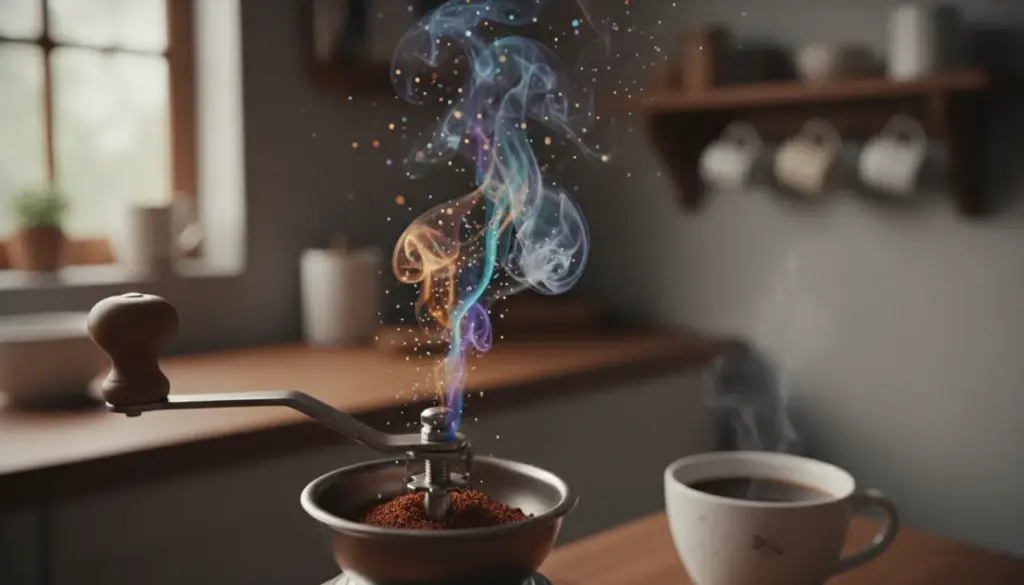
Roasted beans emit a complex bouquet because heat frees many delicate volatile compounds. Those compounds ride in tiny oil pockets inside the bean and begin to change as the roast cools.
Volatile aromatic compounds and oils
Volatile compounds are small molecules that give floral, fruity, nutty, and spicy notes. They evaporate or chemically shift with exposure to air, light, or heat.
What Would You Like to Learn Next?
Choose an option below:
Oils carry many key flavors. Once ground, those oils touch oxygen and start to alter, which reduces complexity.
Surface area and rapid oxidation
Grinding creates a surface explosion: more surface means far more contact with oxygen. That speeds oxidation, which makes flavors flatter or harsher over short periods.
Rule of 2 timelines and degassing
Rule of 2: unprotected whole beans can lose ~50% of aromas in ~2 days. Ground coffee shows similar decline in ~2 hours. A brewed cup drops quickly—about 50% in ~2 minutes.
Freshly roasted beans also degas CO₂ strongly in the first days. Too-fresh beans may brew unevenly; many brewers aim for a 7–21 day window for best extraction.
- Grind right before brewing.
- Use whole beans stored correctly for days, not weeks.
- Treat the cup as time-sensitive—drink within minutes for peak flavor.
| Stage | Typical 50% decline | Main driver | Practical tip |
|---|---|---|---|
| Whole beans | ~2 days | Evaporation & degassing | Store airtight, dark, cool |
| Ground | ~2 hours | Surface area & oxidation | Grind just before brew |
| Brewed cup | ~2 minutes | Volatile escape to air | Sip soon after pouring |
| Too-fresh roasted | Varies (1–7 days) | CO₂ degassing affects extraction | Rest 7–21 days if possible |
Coffee aroma loss: the main enemies speeding up staling
Four household factors do most of the damage to freshness: oxygen, heat, light, and moisture. These four accelerate chemical degradation and dull what you perceive in a cup.
Oxygen and oxidation: how ground coffee goes flat
Every time a package or container opens, oxygen enters and oxidation resumes.
Ground beans go flat faster because oxygen contacts many more particles at once. That reduces perceived aromas and mutes flavor definition.
Heat and temperature swings: faster degradation and off-flavors
Heat speeds reactions that break delicate compounds. Storing near ovens, dishwashers, or sunny windows causes rapid degradation and off-tastes.
Light exposure: evaporation and chemical breakdown of aromas
Light both warms the contents and breaks molecules. UV is especially damaging, so clear jars on a counter are a bad choice for long-term quality.
Moisture and humidity: hygroscopic beans, clumping, and quality loss
Beans and grounds pull humidity from the air and can clump. That speeds staling and may harm extraction or, in extremes, safety.
Environmental odors: how coffee absorbs smells and dulls taste
Stored near spices or in refrigerators, coffee will pick up surrounding odors. That skews what you taste and hides origin notes.
“Reduce oxygen, stabilize temperature, block light, and keep moisture and odors away to preserve freshness.”
| Enemy | Effect | Common household risk |
|---|---|---|
| Oxygen | Oxidation, flatter taste | Frequent opening of package or jar |
| Heat | Faster chemical breakdown | Cabinet above oven, sunny counter |
| Light | Evaporation & UV damage | Clear container on display |
| Moisture | Clumping, faster degradation | Humid kitchens, non-airtight package |
For practical storage tips, see this storage guide to pick the right container and place.
How to Preserve Freshness and Coffee Taste With Better Grinding and Storage
A few simple storage and grinding habits preserve more flavor than expensive gadgets. Start by buying whole beans and only grind what you need right before you brew.
Grind only what you need
Match grind size to your brew method. Use fine for espresso, medium for drip and pour-over, and coarse for French press. Grinding immediately before brewing limits oxidation and keeps cups brighter.
Choose the right container
Pick an airtight, opaque container. Materials such as stainless steel, ceramic, aluminum, or dark glass block light and seal out air.
Where to store beans
Store coffee in a cool, dry, dark spot away from ovens, sunlight, and heat. A pantry or closed cabinet is best.
Use the roast date
Aim to brew most bags within days 7–21 after the roast date. That window balances degassing and peak flavor for most roasts.
How long it stays good
Whole beans often keep acceptable quality for about 4–6 weeks if stored well. Ground product declines faster—expect peak quality in 2–3 weeks and noticeable change in a few days.
Buying and cold storage strategy
Buy smaller bags more often, or portion large purchases into smaller airtight containers to avoid repeated openings.
Freezing can help when beans are vacuum-sealed and thawed once per portion. Avoid the fridge; it adds moisture and household odors.
“Grind less, store better, and use roast dates as your guide for the freshest cup.”
- Buy whole beans and split into small, airtight containers.
- Grind only the amount you need right before you brew.
- Store containers in a cool, dark pantry—no direct heat or sunlight.
- Use older beans for cold brew if beans lose their edge; the method masks some staling.
| Practice | Why it helps | Best container | Expected quality span |
|---|---|---|---|
| Whole beans in small portions | Less oxygen exposure with fewer openings | Opaque, airtight stainless steel or ceramic | 4–6 weeks |
| Grind before brewing | Limits surface oxidation | Grind only per brew; store grounds briefly if needed | 2–3 weeks (quality drops faster) |
| Freeze sealed portions | Slows chemical change if airtight | Vacuum or heavy-duty freezer bags | Months if never rethawed repeatedly |
| Use roast date window | Balances degassing and aroma peak | Track date on package | Best in days 7–21 |
Conclusion
Small storage and grinding choices produce the biggest gains in perceived taste over time. Roasted coffee holds fragile volatile notes, and cutting beans open with a grinder speeds their decline. Protecting those compounds keeps more flavor in the cup.
Limit oxygen, avoid heat and light, keep moisture away, and block household odors. These four controls are the simplest, highest-impact steps you can take.
Practical routine: buy whole beans, store portions in opaque airtight containers, and grind immediately before you brew. Use the roast date and aim for the 7–21 day window to plan use.
If beans are getting older and aroma and flavor are fading, change your brew method or repurpose them (cold brew works well) instead of wasting them. Small choices add up to noticeably better taste.
FAQ
Why does coffee lose aroma so quickly after grinding?
What happens to aromas after roasting and grinding?
Why do volatile aromatic compounds and oils make flavor fade fast?
How does increased surface area in ground beans cause rapid oxidation?
What is the "rule of 2" timeline for aroma loss in beans, ground coffee, and in the cup?
What is degassing and why can "too fresh" be a problem?
How does oxygen cause ground coffee to go flat?
How do heat and temperature swings accelerate degradation?
Does light exposure affect evaporation and chemical breakdown?
How do moisture and humidity harm beans?
Can environmental odors affect coffee taste?
Should I grind only what I need and match grind size to brew method?
What container types best protect aroma?
Where is the best place to store beans?
How should I use roast dates and what is the ideal brewing window?
How long do whole beans vs ground coffee stay good?
Is buying smaller bags more effective than one large bag?
Should I refrigerate or freeze beans?
When older beans lose their edge, is cold brew a good option?
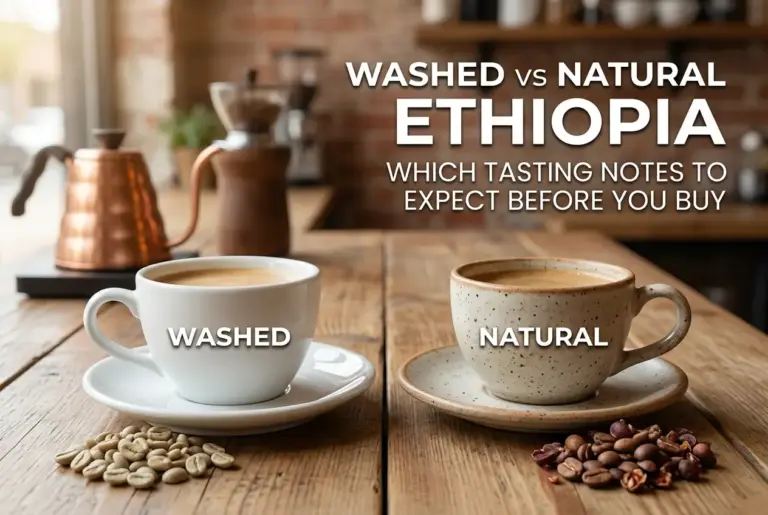
Washed Ethiopia vs Natural Ethiopia: Which Tasting Notes to Expect Before You Buy
» Discover special tips and stories about coffee